
Lymphatic Massage After Surgery: Timing, Recovery Support, and Questions to Ask
May 13, 2026
Endolift Before and After: What Results Can You Realistically Expect?
June 2, 2026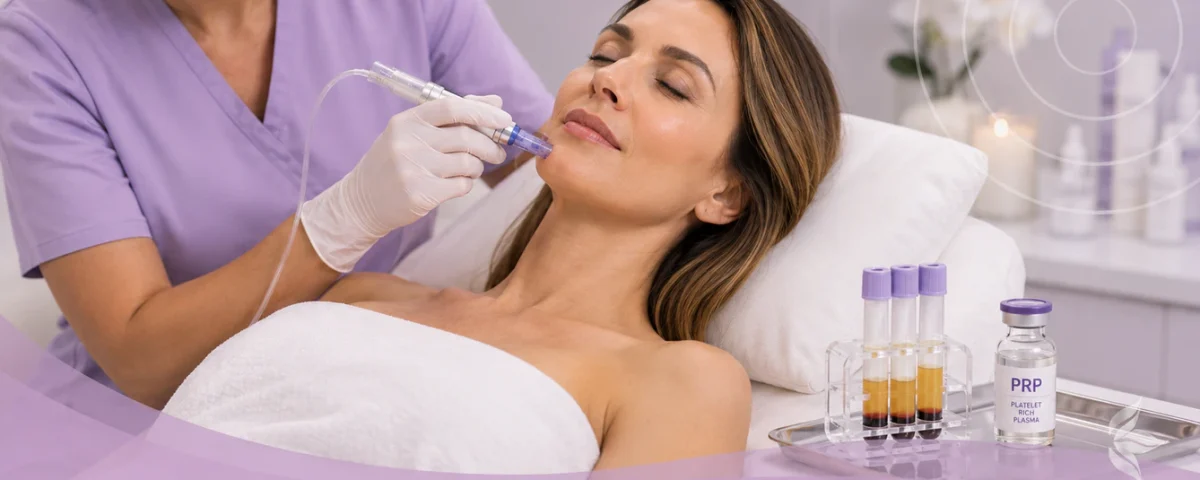
If you have researched skin rejuvenation treatments, you have probably come across microneedling and platelet-rich plasma (PRP) mentioned separately, and often together. That is because pairing the two, sometimes nicknamed a “vampire facial,” has become one of the more popular combination treatments in aesthetic medicine. Since each treatment stimulates collagen through a different mechanism, combining them in a single session can amplify results beyond what either treatment typically achieves alone.
This guide walks through how microneedling with PRP actually works, what your appointment will look like from start to finish, and how to decide whether the combination fits your skin goals.
What Is Microneedling With PRP?
Microneedling with PRP combines two separate procedures into one appointment. First, a provider draws a small blood sample and spins it in a centrifuge to isolate the platelet-rich plasma, the concentrated portion of your blood that contains growth factors. Next, the provider performs microneedling, using a device with fine, sterile needles to create controlled micro-injuries in the skin’s outer layer. Because those micro-injuries are what trigger your skin’s natural healing response, applying PRP to the skin immediately afterward allows the growth factors to reach deeper into the treated area than a topical product could reach on its own.
The result is a single, streamlined visit that pairs the mechanical stimulation of microneedling with the biological signaling of platelet-rich plasma, rather than treating them as two separate appointments.
Why Combine These Two Treatments?
Microneedling and PRP each encourage collagen production, but they do so in different ways, which is exactly why pairing them makes sense for many patients. Microneedling creates the physical pathway, tiny micro-channels that temporarily increase how well your skin absorbs what is applied to it. PRP then supplies concentrated growth factors directly into those channels, where they can support the healing and remodeling process more efficiently than if PRP were simply applied to intact skin.
Because the two treatments work together rather than in isolation, many patients notice that their skin looks more refreshed after the combination than after microneedling alone. That said, individual results vary, and your provider is the best resource for setting realistic expectations based on your specific skin.
Your Treatment Journey: What to Expect
Knowing what happens at each stage of a microneedling with PRP appointment can help you feel prepared and relaxed on treatment day. Most sessions follow a similar sequence:
- Consultation and skin assessment: Your provider reviews your goals, medical history, and skin concerns to confirm you are a good candidate.
- Numbing: A topical numbing cream is applied to the treatment area and left on for about 30 minutes to minimize discomfort.
- Blood draw: A small blood sample is taken, similar to a routine lab draw, and placed into a centrifuge.
- PRP preparation: While the centrifuge separates the plasma from other blood components, your provider cleanses the treatment area.
- Microneedling: The provider passes the microneedling device across the treatment area to create controlled micro-injuries.
- PRP application: The isolated PRP is applied to the skin immediately afterward, so it can absorb through the freshly created micro-channels.
- Aftercare guidance: Your provider explains how to care for your skin over the following days.
Because the entire process, from blood draw to final application, typically happens in a single visit, most appointments take between 60 and 90 minutes depending on the treatment area.
Benefits of Combining Microneedling and PRP
Patients pursue this combination for a range of skin concerns, since the treatment addresses both texture and overall skin quality at once. Commonly reported benefits include:
- Improved texture and tone: Many patients notice smoother, more even-looking skin as the treated area heals.
- Reduced appearance of fine lines: Collagen stimulation can soften the look of early fine lines over time.
- Support for acne scarring: The combination is frequently used to help improve the appearance of shallow to moderate acne scars.
- A natural approach: Because PRP uses your own blood, there is no risk of an allergic reaction to a synthetic filler or serum.
- Enhanced absorption: The micro-channels created by microneedling allow PRP’s growth factors to penetrate more effectively than a topical application alone.
Microneedling With PRP vs. Microneedling Alone
Understanding how the combination differs from standard microneedling can help you decide which option best fits your goals and budget.
| Factor | Microneedling Alone | Microneedling With PRP |
| Mechanism | Micro-injuries trigger the skin’s natural healing response | Micro-injuries plus concentrated growth factors from your own blood |
| Appointment Length | Typically 30 to 60 minutes | Typically 60 to 90 minutes, due to the blood draw and PRP preparation |
| What’s Applied to the Skin | Often a hydrating serum | Your own platelet-rich plasma |
| Best For | General texture, tone, and mild fine lines | More stubborn texture concerns, acne scarring, and patients wanting to maximize results |
| Recovery Appearance | Mild redness for a day or two | Mild redness, occasionally with a slightly deeper pink tone right after treatment |
What Results Look Like and When to Expect Them
Because both microneedling and PRP work by encouraging your body’s own collagen production, results build gradually rather than appearing overnight. Most patients notice an initial glow within the first week, as swelling subsides and circulation improves in the treated area. The more meaningful changes in texture and tone typically continue to develop over the following four to six weeks, as new collagen forms beneath the surface.
For patients targeting acne scarring or more noticeable texture concerns, providers often recommend a series of three to four sessions, spaced four to six weeks apart, to achieve the fullest results. Since everyone’s skin responds a little differently, your provider will tailor a specific plan to your goals during your consultation.
Downtime and Aftercare
Recovery after microneedling with PRP is generally similar to standard microneedling, though many patients notice slightly more initial redness due to the PRP application. Following your provider’s aftercare guidance closely tends to support a smoother, more comfortable recovery.
| Timeframe | What to Expect |
| Day 1 | Redness and mild swelling, similar to a moderate sunburn; skin may feel tight |
| Day 2–3 | Redness fades to a pink tone; some patients notice mild flaking as the skin renews |
| Day 4–7 | Most visible redness resolves; makeup can typically resume once skin is no longer sensitive |
| Week 2–6 | Gradual improvement in texture and tone continues as new collagen forms |
During recovery, avoid direct sun exposure, use a gentle cleanser, and skip retinoids or exfoliants until your provider confirms your skin has fully healed. Because your skin is more sensitive than usual immediately after treatment, applying sunscreen daily helps protect your results and prevent unwanted pigmentation changes.
Who Is a Good Candidate?
Most patients dealing with uneven texture, early fine lines, or acne scarring make reasonable candidates for microneedling with PRP. That said, certain conditions may require a modified approach or a different treatment altogether, including active skin infections, certain blood disorders, and pregnancy. Since a thorough evaluation helps identify these situations early, a complimentary consultation remains an important first step before scheduling treatment.
Your provider will also ask about any blood-thinning medications or supplements you take, since these can influence bruising at the blood draw site and should generally be paused beforehand under your provider’s guidance.
Cost Considerations and Session Planning
Because microneedling with PRP involves both a blood draw and plasma preparation in addition to the microneedling itself, sessions are generally priced higher than microneedling alone. Rather than comparing single-session prices in isolation, it helps to think about the full recommended series and how it fits your goals and budget. Many providers offer a package rate for a series of sessions, which can make ongoing treatment more manageable than paying per visit.
Since pricing depends on the treatment area, the number of sessions recommended, and your specific concerns, an accurate quote requires a consultation. If budget is a factor, mention that directly so your provider can help you prioritize the areas or session frequency that will have the biggest impact on your goals.
Frequently Asked Questions
Does microneedling with PRP hurt?
Most patients describe mild discomfort rather than significant pain, largely because a topical numbing cream is applied before treatment begins. Some sensation during the microneedling pass is normal, though it is generally well tolerated.
How is PRP different from the serums used in regular microneedling?
PRP comes from your own blood, so it contains your body’s own concentrated growth factors, whereas standard serums are formulated products applied topically. Because PRP is autologous, meaning it comes from you, there is no risk of an allergic reaction to it.
How many sessions will I need?
Session recommendations vary by patient and goal, though providers commonly suggest a series of three to four sessions spaced several weeks apart for noticeable improvement in texture or scarring. Your provider will confirm a specific plan during your consultation.
Is there any downtime?
Yes, though it is typically brief. Expect redness and mild swelling for a day or two, with most visible signs resolving within a week. Because recovery is relatively short, many patients schedule sessions around a quiet weekend.
Can microneedling with PRP help acne scars?
Many patients pursue this combination specifically for shallow to moderate acne scarring, since the added growth factors may support more noticeable improvement over a series of sessions. Deeper or more severe scarring may benefit from additional or alternative treatments, which your provider can discuss with you.
Who should avoid this treatment?
Patients who are pregnant, have active skin infections, or have certain blood disorders are generally not good candidates. A consultation helps your provider confirm whether the combination is appropriate for your specific health history.
Ready to Learn More?
Ecologica Medical Spa offers microneedling with PRP for patients throughout Montebello and the greater Los Angeles area, with a complimentary evaluation available to help determine whether the combination fits your skin goals. Learn more about our Micro-needling treatment, or explore our Platelet-Rich Plasma Therapy. To schedule your consultation, call (323) 888-8805 or visit us at 1200A W Beverly Blvd, Montebello, CA 90640.
This article offers general educational information and does not replace a personalized skin consultation. A licensed provider should evaluate your skin type, health history, and goals before recommending a specific treatment plan.