
Non-Surgical Sagging Skin Treatment in Los Angeles: Endolift vs HIFU vs Radio Frequency
August 26, 2026
Sculptra vs. Dermal Fillers: How to Choose the Right One
September 16, 2026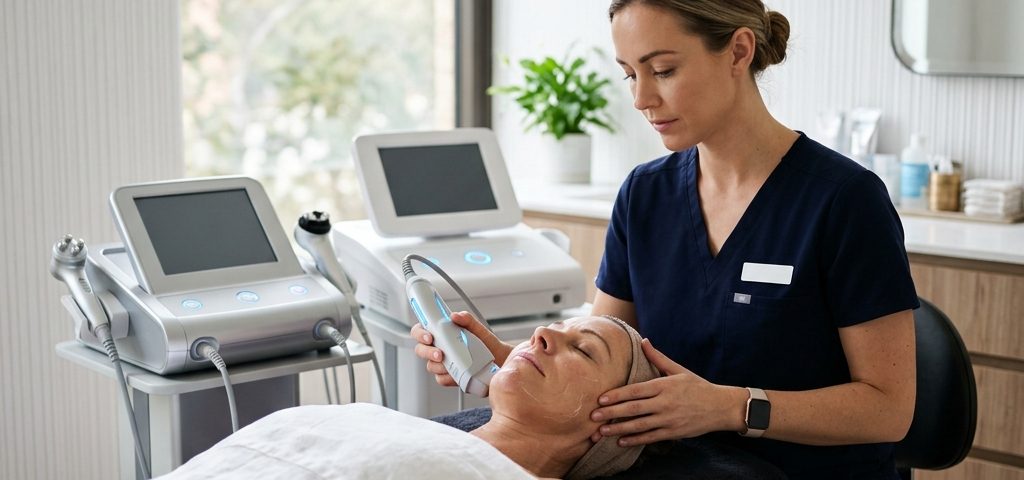
HIFU vs Radiofrequency are two popular skin-tightening treatments, and each one uses a different kind of energy to firm and lift the skin. HIFU sends focused ultrasound waves to deeper tissue layers, while radiofrequency uses gentle heat to support collagen closer to the surface. Both options work well on their own, and a provider visit helps match the right treatment to your skin.
This guide explains how each treatment works, where providers use it, and what to expect during recovery. It also covers how patients and providers approach the decision together at a consultation. Every skin type is unique, so working with your provider helps set clear, realistic goals for your results.
HIFU vs. Radiofrequency at a Glance
HIFU vs Radiofrequency are both popular, nonsurgical options for firming loose skin. HIFU focuses ultrasound energy on deeper tissue, and radiofrequency uses heat to support collagen near the surface. Providers often recommend one, the other, or a combination based on your goals and skin type.
How HIFU Works
HIFU sends focused ultrasound energy beneath the skin’s surface without any cuts or injections. This approach to HIFU vs Radiofrequency treatment supports the body’s own collagen production over time, which is why results build gradually. Our HIFU treatment page explains how sessions work for the face, neck, and body.
How Radiofrequency Works
Radiofrequency uses gentle heat to support the skin’s own collagen and elastin production. Many patients feel a warm, soothing sensation during a session, which most skin types find comfortable. Our radiofrequency treatment options include facial and body treatments, and this HIFU vs Radiofrequency guide covers both applications.
Key Differences in Energy, Treatment Depth and Session Experience
This part of our HIFU vs Radiofrequency comparison highlights how energy type shapes the treatment experience. HIFU generally reaches deeper tissue layers, and radiofrequency generally works closer to the surface. Session comfort varies by person, and a provider visit gives clear answers about your particular skin.
Treatment Areas
HIFU and radiofrequency both work well across the face, neck, and body. Radiofrequency pairs well with ultrasound cavitation for body areas, supporting smoother skin and helping address stubborn fat pockets. This HIFU vs Radiofrequency overview helps you match the right treatment area to your goals.
Downtime and Aftercare
Both treatments let you return to your normal routine right away, since each is a gentle, nonsurgical option. Radiofrequency sessions run about thirty to sixty minutes, depending on the treatment area. This ease of recovery is part of what makes HIFU vs Radiofrequency treatments a popular choice for busy schedules.
How to Discuss the Right Option at a Consultation
A consultation gives your provider a clear picture of your skin and goals. Together, you review areas of concern and timelines, and decide whether combining treatments makes sense for your plan. Patients focused on facial sagging often explore our face lifting services alongside this HIFU vs Radiofrequency comparison.
FAQs
Do HIFU and radiofrequency both help with skin tightening?
Yes, this HIFU vs Radiofrequency comparison shows both treatments support firmer, tighter skin through different methods. HIFU reaches deeper tissue layers, and radiofrequency works closer to the surface. A provider visit helps you find the option that matches your skin and goals.
What does HIFU feel like during treatment?
Most patients feel brief, focused sensations as the device moves across treatment areas. Comfort levels vary by person and treatment area. Your provider can walk you through what to expect before your session begins.
What does radiofrequency feel like during a session?
Radiofrequency treatments create a warm, soothing feeling as the device gently heats the skin. Many patients find this comfortable throughout the session. Providers adjust settings to match your comfort and treatment goals.
Can HIFU and radiofrequency work together in one plan?
Providers sometimes combine treatments that work at different tissue depths for a more complete plan. This approach depends on your skin and goals, so a consultation is the best place to explore it. Your provider will build a plan suited to your particular needs.
How long do results from these treatments last?
Results build gradually as your body responds to treatment, and duration varies by person. Following your provider’s aftercare guidance helps support longer-lasting results. Regular visits with your provider help keep your plan on track.
What areas can radiofrequency treat?
Radiofrequency works well on the face to firm and tighten the skin. It can also be paired with ultrasound cavitation on the body to support smoother contours. A provider can map out the best treatment areas for your goals.
Is HIFU a good alternative to a facelift?
HIFU offers a nonsurgical approach to firming loose skin, and many patients consider it an alternative worth discussing with their provider. Results and timelines vary by person, so a consultation sets clear expectations. This makes HIFU a popular starting point for patients curious about nonsurgical options.
How can you know which treatment fits your skin?
A consultation gives your provider the full picture of your skin, goals, and lifestyle. From there, your provider recommends the plan best suited to your needs, whether that means HIFU, radiofrequency, or a combination of both. This guide offers a starting point for that conversation.
What should you expect for downtime after HIFU or radiofrequency treatment?
Both treatments let you resume your normal day right away, since each is a gentle, nonsurgical option, and this HIFU vs Radiofrequency comparison covers what to expect for recovery. Mild warmth or light sensitivity may follow a session and fade quickly. Your provider will share any care steps suited to your treatment and skin.