
Microneedling Downtime: A Day-by-Day Recovery and Aftercare Guide
February 19, 2026
How Much Does Vitamin C IV Therapy Cost? What Affects the Price
March 12, 2026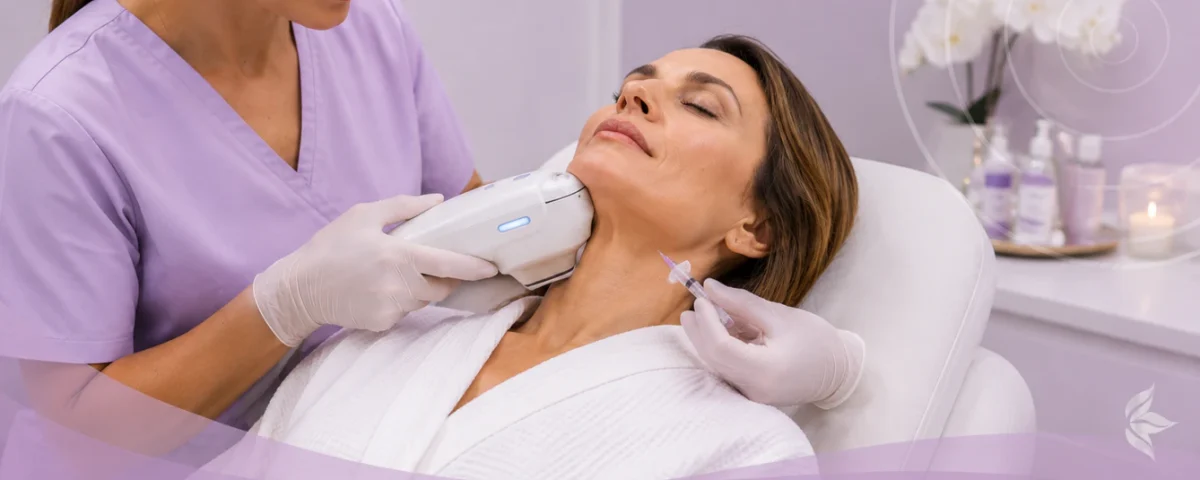
Submental fullness, the clinical term for a double chin, is one of the most common concerns patients bring up during a consultation. Because two very different non-surgical treatments, Kybella and HIFU, are both marketed for the chin and jawline area, patients often are not sure which one actually matches what they are trying to fix. Kybella is an injectable that destroys fat cells, while HIFU is an ultrasound-based device that tightens skin. Since those are two different jobs, picking the right one starts with understanding what each treatment is actually built to do.
This guide compares Kybella vs HIFU for a double chin so you can walk into your consultation with a clearer sense of which direction fits your goals.
Why These Two Treatments Get Compared
Patients researching double chin treatments frequently search for both injectable and ultrasound-based options, and it is easy to see why the two get lumped together. Both are non-surgical, both are performed in a med spa setting, and both are commonly discussed for the under-chin and jawline area. However, because Kybella dissolves fat cells and HIFU heats tissue to stimulate collagen and tighten skin, the two treatments address fundamentally different causes of submental fullness. If you have also come across the term “Ultherapy” while researching ultrasound skin tightening, that name refers to a specific branded device; Ecologica Medical Spa’s ultrasound-based offering for the chin and jawline is its HIFU treatment, which uses the same underlying focused-ultrasound technology.
How Kybella Works
Kybella is an FDA-approved injectable treatment built around deoxycholic acid, a molecule your body already produces naturally to help break down dietary fat. When a trained provider injects Kybella into the fat beneath your chin, the deoxycholic acid destroys the membranes of the targeted fat cells. Because those cells are physically destroyed rather than simply shrunk, they can no longer store or accumulate fat once treatment is complete, which is why further sessions are not typically needed once you reach your desired result.
A single Kybella appointment usually involves multiple small injections placed carefully beneath the chin, and the injection process itself takes about 15 to 20 minutes. The exact number of injections depends on how much submental fat you have and the outcome you are hoping to achieve. Because results build gradually as your body clears the destroyed fat cells, providers space Kybella sessions about one month apart, and most patients need more than one session to reach their full result.
How HIFU Works
High-Intensity Focused Ultrasound, or HIFU, takes a completely different approach. Rather than targeting fat directly, HIFU delivers focused ultrasound energy beneath the skin’s surface to heat the deeper tissue layers. That controlled heat stimulates new collagen production, which is what creates the lifting and tightening effect HIFU is known for. Since the treatment does not involve needles or incisions, most patients tolerate a session with only mild, temporary warmth or a tingling sensation in the treated area.
Because HIFU works on skin laxity rather than fat volume, it tends to suit patients whose chin-area concern is more about loose or sagging skin than about a stubborn pocket of fat. A single session can produce a visible difference, though, since collagen continues rebuilding for months after treatment, results typically continue improving over time rather than appearing all at once.
Kybella vs HIFU: Side-by-Side Comparison
| Factor | Kybella | HIFU |
| Treatment Type | Injectable (deoxycholic acid) | Non-invasive focused ultrasound |
| Primary Target | Submental fat cells | Deeper skin layers and collagen |
| What It Addresses | Excess fat volume under the chin | Loose or sagging skin, mild laxity |
| Session Length | About 15 to 20 minutes | Varies by treatment area |
| Typical Course | Multiple sessions, spaced about one month apart, up to six total | Often one session, with results building over following months |
| Results Timeline | Gradual, as the body clears destroyed fat cells | Gradual, as new collagen forms over two to three months |
Which Treatment Fits Your Goals?
Choosing between Kybella and HIFU largely depends on what is actually causing your submental fullness. If you have a noticeable pad of fat beneath the chin and your skin still has good elasticity, Kybella directly addresses that fat volume in a way HIFU is not designed to do. On the other hand, if your chin and jawline area feels more like loose or crepey skin than stubborn fat, HIFU’s collagen-stimulating effect is likely to make more of a visible difference.
Age and skin quality also play a role in this decision. Because collagen production naturally slows over time, patients who notice sagging alongside fullness sometimes benefit from HIFU either as a standalone treatment or as a complement to Kybella once fat volume has been addressed. Since every chin and jawline looks a little different, a hands-on evaluation is the most reliable way to determine which mechanism, fat reduction or skin tightening, is actually driving your specific concern.
Can Kybella and HIFU Be Combined?
Yes, some patients pursue both treatments as part of a broader plan for the chin and jawline area, particularly when both excess fat and skin laxity are present. Providers generally sequence Kybella first, since reducing fat volume is often addressed before assessing how much additional tightening the skin needs. Whether combining the two treatments makes sense for you depends on your specific anatomy, goals, and how your provider structures your consultation recommendation, so this is a conversation worth having directly with your provider rather than assuming either treatment alone will fully address a combination concern.
What to Expect: Downtime and Aftercare
Because Kybella is an injectable treatment and HIFU is a heat-based ultrasound treatment, their recovery profiles differ somewhat, even though both are considered minimally disruptive to daily life.
| Consideration | Kybella | HIFU |
| Common Side Effects | Swelling, bruising, numbness, redness, areas of firmness | Mild redness or temporary tenderness |
| Activity Restrictions | Avoid alcohol and strenuous exercise for 24 hours | None; most patients resume normal activity right away |
| Visible Downtime | Swelling can be noticeable for several days to about a week | Minimal; occasional mild redness resolves quickly |
| Special Precautions | Disclose swallowing issues, prior neck or facial procedures, and bleeding conditions beforehand | None specific beyond standard consultation screening |
Because Kybella can cause more noticeable swelling than HIFU, some patients plan their sessions around a period when they do not have major events or photos scheduled. Since HIFU generally involves less visible recovery, it is often easier to fit around a busy calendar, though results still take time to fully develop regardless of which treatment you choose.
Safety Considerations
Kybella carries specific risks that your provider should review with you in detail before treatment, including the possibility of trouble swallowing or temporary nerve-related muscle weakness affecting your smile. Patients should disclose any prior facial, neck, or chin surgery, existing medical conditions in that area, and any difficulty swallowing during their consultation, since these factors can affect candidacy. HIFU is generally considered low-risk given its non-invasive nature, though a thorough consultation still helps confirm it is the right fit for your skin and goals.
Neither treatment is recommended during pregnancy or while breastfeeding, and both benefit from a complimentary evaluation beforehand so your provider can review your full medical history and set realistic expectations.
Cost Considerations and Session Planning
Pricing for both Kybella and HIFU depends on several factors, including the amount of fat or skin laxity being treated, the number of sessions your provider recommends, and whether the two treatments are combined into a single plan. Because Kybella often requires multiple sessions to reach a full result, it helps to think in terms of the complete recommended course rather than comparing a single session price in isolation. HIFU pricing, meanwhile, is typically based on the treatment area and whether one or more sessions are advised.
Since an accurate quote depends on your specific anatomy and goals, the most reliable way to understand cost is through a consultation. If budget is a meaningful factor in your decision, mention that directly so your provider can help you prioritize the approach that offers the most noticeable improvement for your investment.
Frequently Asked Questions
Is Kybella or HIFU better for a double chin?
Neither treatment is universally “better,” since they address different causes of submental fullness. Kybella targets excess fat directly, while HIFU targets loose or sagging skin. Your provider can help determine which mechanism is actually driving your specific concern.
Does Kybella hurt?
Most patients describe mild discomfort during the injections, along with swelling and tenderness afterward that typically improves over the following days. Your provider can discuss comfort measures during your consultation.
How many HIFU sessions will I need for my chin?
Many patients see a visible difference after a single HIFU session, since collagen continues developing for months afterward. That said, your provider may recommend additional sessions depending on your goals and how your skin responds.
Can I combine Kybella and HIFU in the same treatment plan?
Yes, some patients do, particularly when both excess fat and skin laxity are present. Your provider can help sequence the two treatments appropriately based on your specific anatomy.
How long do results last?
Kybella destroys fat cells permanently, so once you reach your desired result, the treated cells cannot store fat again. HIFU results depend on your body’s ongoing collagen production and natural aging process, so periodic maintenance sessions are common.
Is there downtime with either treatment?
Kybella can cause noticeable swelling for several days to about a week, while HIFU typically involves little to no visible downtime. Your provider can help you plan your sessions around your schedule.
Find the Right Chin Treatment for You
Ecologica Medical Spa offers both Kybella and HIFU for patients throughout Montebello and the greater Los Angeles area, with a complimentary evaluation available to help determine which approach fits your submental fullness. Learn more about our Kybella treatment, or explore our HIFU service. To schedule your consultation, call (323) 888-8805 or visit us at 1200A W Beverly Blvd, Montebello, CA 90640.
This article offers general educational information and does not replace a personalized consultation. A licensed provider should evaluate your anatomy, medical history, and goals before recommending a specific treatment plan.